World
-
Date:
-
9/13/2016
-
Time:
-
17:24:47
-
Author:
-
Stephen Evans
-
-
-
Source:
-
BBC News
-
-
-
Content:
-
Amid all the bluster and sabre-rattling, how do scientists assess North Koreas ability to launch a nuclear attack on its neighbours or on the mainland of the United States?
The fourth and fifth nuclear tests this year generated a swirl of fearsome rhetoric - both Seoul and Pyongyang said they would turn the other into a heap of ashes.
But can we see clearly what the actual scientific situation is? Stripping away the chest-thumping, what could Kim Jong-uns military actually do? And when might it be able to do do it?
There are different components to a nuclear arsenal: it needs a warhead small enough to go on a missile, and to remain intact until it hits the target. And, of course, the missiles themselves, ideally small and mobile enough to avoid being destroyed pre-emptively if preparations for launch are spotted - hence the importance of submarines.
Prof Siegfried S Hecker of Stanford University in California is a former head of the Los Alamos National Laboratory in the US and has visited North Koreas nuclear facilities frequently.
He says, following the fifth nuclear test on Friday: "With the two successful nuclear tests this year, we must assume that the DPRK [North Korea] has designed and demonstrated nuclear warheads that can be mounted on some of its short-range and perhaps medium-range missiles.
"Its ability to field an ICBM (inter-continental ballistic missile) fitted with a nuclear warhead capable of reaching the United States is still a long way off - perhaps five to 10 years, but likely doable if the programme is unconstrained."
This means that there is already a real danger in his view. Miscalculations in the region become much more likely as South Korea, Japan and the United States fear that nuclear attack in the region is possible - pre-emptive strikes become much more likely.
Prof Hecker also worries that North Koreas technological ability increases the likelihood of the spread of nuclear weapons [technology and material] to "non-state actors" - or "terrorists" to you and me.
He said: "Much more troubling for now is that its recent nuclear and missile successes may give Pyongyang a false sense of confidence and dramatically change regional security dynamics. The likely ability of the DPRK to put nuclear weapons on target anywhere in South Korea and Japan and even on some US assets in the Pacific greatly complicates the regional military picture."
He continues that we cant "rule out that a financially desperate leadership may risk the sale of fissile materials or other nuclear assets, perhaps to non-state actors".
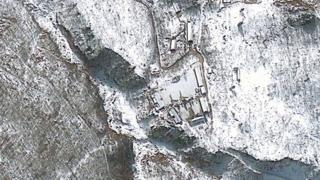
Prof Hecker visited the Yongbyon centrifuge facility (where material is produced) in November, 2010. Based on the equipment he saw and his assessment of stocks of uranium and plutonium, he thinks it plausible that North Korea has "a stockpile of sufficient fissile material for approximately 20 bombs by the end of this year and a capacity of adding approximately seven per year".
One of the essential components of an effective nuclear arsenal is the ability to hide the missiles so they cant be destroyed before launch. Accordingly, the testing of submarine-launched missiles has particularly worried North Koreas enemies.
According to the aerospace engineer John Schilling, who specialises in missile technology: "The success of North Koreas latest submarine-launched ballistic missile (SLBM) test suggests the programme may be progressing faster than originally expected.
"However, this does not mean it will be ready next week, next month, or even next year. Rather, the pace and method of the Norths SLBM testing would suggest possible deployment in an initial operational capability by the second half of 2018 at the earliest."
North Korea is also making progress on missiles fired from land. Testing has been frequent this year and distances have been increased.
In June, for example, it fired a missile that reached an altitude of 1,000km (620 miles). It probably fired high rather than long to avoid Japan (an action which would have been too provocative) but the distance travelled impressed Jeffrey Lewis of the Middlebury Institute of International Studies in California.
"That suggests the missile worked perfectly. Had it been fired at its normal angle, it would have flown to its full range," he said.
There are other bits of the jigsaw, like being able to make heat-tolerant materials for warheads which would allow them to re-enter the atmosphere on the tops of missiles and explode on target. North Korea claims to have done this.
The upshot of the most convincing scientific analysis is that North Korea may have the ability to launch nuclear attacks in the region at the moment but not to strike targets further afield, like the United States.
But its getting there and may have that ability from 2020, perhaps a few years later, although the scientists reckon its no longer a remote prospect.
Prof Hecker, widely viewed as the most authoritative expert, also has views on the politics of it all.
"The latest nuclear test demonstrates conclusively that attempting to sanction the DPRK into submission and waiting for China to exert leverage over Pyongyangs nuclear programme do not work," he said.
"Increasing sanctions and adding missile defences in South Korea to that mix will also not suffice and make China even less likely to co-operate.
"Whats missing is diplomacy, as much as Washington may find it repugnant to deal with the Kim regime."
-
Orignial Link :
-
http://www.bbc.com/news/world-asia-37353956
-
crawlTime:
-
9/13/2016 6:45:23 PM
Back to List
All Comments
|
UserName
|
commentContent
|
numOfComentLikes
|
Datetime
|
|
ADD A COMMENT